Skip to content

Table of Contents
If you have ever noticed tiny white or yellow bumps on your face that do not go away, you are not alone. Many adults feel annoyed or confused when these small bumps appear, especially around the eyes or cheeks, where makeup cannot effectively hide them. These bumps are often harmless, but they can linger for months and feel impossible to remove safely at home. Understanding what they are, why they appear, and how they can be treated helps protect both your skin’s appearance and its long-term health. At Nicole Caroline Skin, questions about milia removal are common, especially from clients who want clear, honest answers without pressure.
What Is Milia?
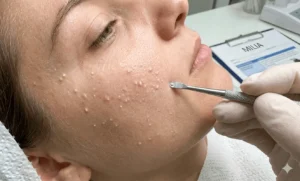
To put it simply, what is milia? Milia are small, firm bumps that sit just beneath the skin’s surface. They are usually white or pale yellow and feel hard when touched. Unlike pimples, they do not contain pus or bacteria, and they are not caused by acne.
These bumps often appear in clusters and tend to show up on delicate areas of the face. The most common spots include the under-eye area, eyelids, cheeks, and along the nose. Some people also notice them on the forehead or jawline. Because they are subtle but persistent, many people assume they will fade on their own, only to find them still there months later.
How Milia Forms
To understand how milia forms, it helps to look at what happens beneath the skin. Milia develop when keratin, a natural protein found in skin, hair, and nails, becomes trapped under the surface. Instead of shedding normally, the keratin gets sealed in, creating a tiny cyst.
There are different types of milia. Primary milia often appear without an obvious trigger and are common in both children and adults. Secondary milia form after some type of skin trauma, such as burns, rashes, cosmetic procedures, or even aggressive skincare routines. In both cases, the skin’s natural renewal process is interrupted, leading to these small, stubborn bumps.
Causes of Milia
When considering the causes of milia, it’s helpful to remember that they typically result from a combination of internal skin factors and external triggers rather than a single factor. In adults, these small bumps often form when the skin’s natural renewal process slows or becomes disrupted.
Common factors include:
- Natural buildup of dead skin cells that are not shedding as efficiently as they should
- Slower cell turnover that tends to happen with age
- Sun exposure, which can thicken the outer layer of skin and trap keratin underneath
- Skin damage from burns, rashes, or cosmetic procedures, as the skin heals
- Use of very heavy or occlusive skincare products that seal material beneath the surface
- Friction or irritation in areas where the skin rubs or is frequently touched
Milia can also appear at different life stages. Newborns commonly develop them on the nose or cheeks shortly after birth, and these typically clear on their own without treatment. In adults, however, milia are more persistent and often require professional care to be safely and completely removed.
Milia on Skin: Signs to Watch For
Seeing milia on the skin can be frustrating, especially when they resemble whiteheads at first glance. There are a few key features that help set them apart. Milia are small, usually one to two millimeters in size, and have a smooth, dome-like appearance. They do not become red or inflamed and typically do not hurt.
Unlike pimples, milia do not respond to acne treatments. Squeezing them can damage the skin and increase the risk of scarring or infection. If a bump has been present for weeks without changing and feels firm rather than tender, it is likely milia rather than acne or an allergic reaction.
Prevention of Milia
While milia cannot always be prevented, consistent habits can reduce their frequency. Thoughtful skincare goes a long way toward preventing milia. Gentle exfoliation helps remove dead skin cells so keratin does not get trapped. This does not mean harsh scrubs or daily exfoliating acids, which can irritate the skin and make things worse.
Choosing skincare products suited to your skin type also matters. Rich creams may feel comforting, especially around the eyes, but they can contribute to buildup if used too often. Sun protection is another key step. Daily sunscreen helps keep the skin barrier healthy and prevents thickening from sun damage, which can slow natural shedding.
Small adjustments over time often make a noticeable difference. Keeping the skin clean, hydrated, and protected helps maintain a smoother texture and reduces the risk of new milia forming.
Milia Removal Options
When milia do not clear on their own, removal should be done carefully. Professional treatment is the safest and most effective option, especially for delicate areas like the eyelids. A trained provider uses sterile tools and precise techniques to release the trapped keratin without damaging the surrounding skin.
Some people attempt home remedies, but these come with risks. Poking or picking can lead to irritation, broken capillaries, or lingering marks. Mild exfoliating products may help prevent future bumps, but they rarely remove existing milia completely.
For those seeking trusted care, milia removal in Greenwich, CT, offers access to skilled professionals who understand the skin’s structure and healing. In a clinical setting, the focus is not only on removing what is visible but also on reducing the chance of recurrence through proper aftercare guidance. You can also explore other skin services on the site, such as facial treatments that support healthy skin renewal, to complement professional care.
Final Thoughts and Next Steps
Learning about milia makes it easier to care for your skin with confidence. When you understand why these bumps form and what triggers them, you can make smarter choices about products, sun protection, and treatment timing. While milia are harmless, persistent cases often respond best to professional attention rather than trial-and-error at home.
If you are dealing with stubborn bumps or want clear guidance on treatment options, professional care can make the process straightforward and reassuring. To learn more about safe and effective approaches, discover how to prevent and treat them today. A consultation can help you decide what is right for your skin and move toward a smoother, clearer look with confidence.